
HaZapp™
A crowd-based mobile platform that transforms how environmental hazards get reported, routed, and resolved — across agencies, facilities, municipalities, and campuses.


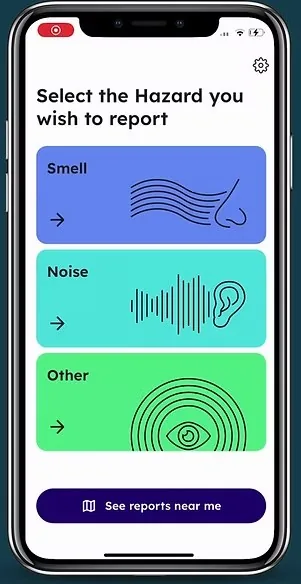
Built to Fix Broken Reporting
Most environmental complaint systems were never designed for the job. Reports come in fragmented across phone lines, email, and paper — often without the location, weather, or evidence needed to act. HaZapp closes that gap.
Fragmented & Reactive
- Phone lines, email forms, and paper — fragmented intake
- Reports lack evidence, location, or weather context
- Days to triage and route to the right team
- Reporters rarely hear what happened next
- Patterns lost across siloed records
Unified & Actionable
- One easy-to-use platform for every environmental hazard type
- Automatic capture of time, GPS location, photos, sound, and meteorological data
- Intelligent routing based on hazard type, severity, and location
- Real-time status updates and transparent communication with reporters
- Built-in cluster, trajectory, and incident pattern analysis for faster investigation and response
From Report to Resolution in Five Steps
A simple, powerful hazard reporting platform that builds community engagement, transparency, and trust.
Users Notice a Hazard
Air pollution, odors, illegal dumping, noise, or other concerns are observed — in the community, at a facility, or on campus.
Submit in Seconds
Smartphones capture the evidence — photos, sound, light, location, and weather. Atmosfir transforms raw inputs into actionable environmental intelligence.
Automatic Routing
Reports are instantly directed to the right team based on hazard type and location.
Map & Pattern Recognition
All reports appear on a dynamic map, creating transparency and enabling cluster identification.
Respond to Reports
Teams receive structured, complete data to act quickly. Status updates keep reporters informed.
The Result
Faster response times. Better data. Stronger environmental protection. Renewed trust between communities and responders.
One Platform. Three Configurations.
HaZapp
Environmental Agencies & Ports
Environmental hazard reporting for state agencies, port authorities, and industrial corridors. HaZapp captures structured data, automatically routes reports to assigned personnel, and stores each case in the HaZapp Admin CRM. Built-in management tools include wind-back trajectory analysis to locate likely sources, automated stakeholder communication, data analysis, and more.
MuniAlert
Municipalities & Local Government
Municipal infrastructure and hazard reporting for roads, water, public safety, waste collection, noise, and environmental concerns. MuniAlert reduces 311 call volume, improves response efficiency, and enables data-driven resource allocation through structured digital reporting and case management.
UniAlert
Universities & Higher Education
Campus safety and facilities hazard reporting for universities and campuses — from infrastructure failures and maintenance issues to student safety concerns. UniAlert provides an easy, cost-effective way to manage campus hazards, with anonymous reporting that helps remove barriers to speaking up. With 55% of students not reporting concerns due to fear of judgment, UniAlert helps create a cleaner, safer, and more supportive campus where students can thrive.
From Reports to Insight
A report is only useful if you can act on it. HaZapp's admin tools turn raw complaints into investigative intelligence — searchable, exportable, and traceable back to a likely source.
Wind-Back Trajectory
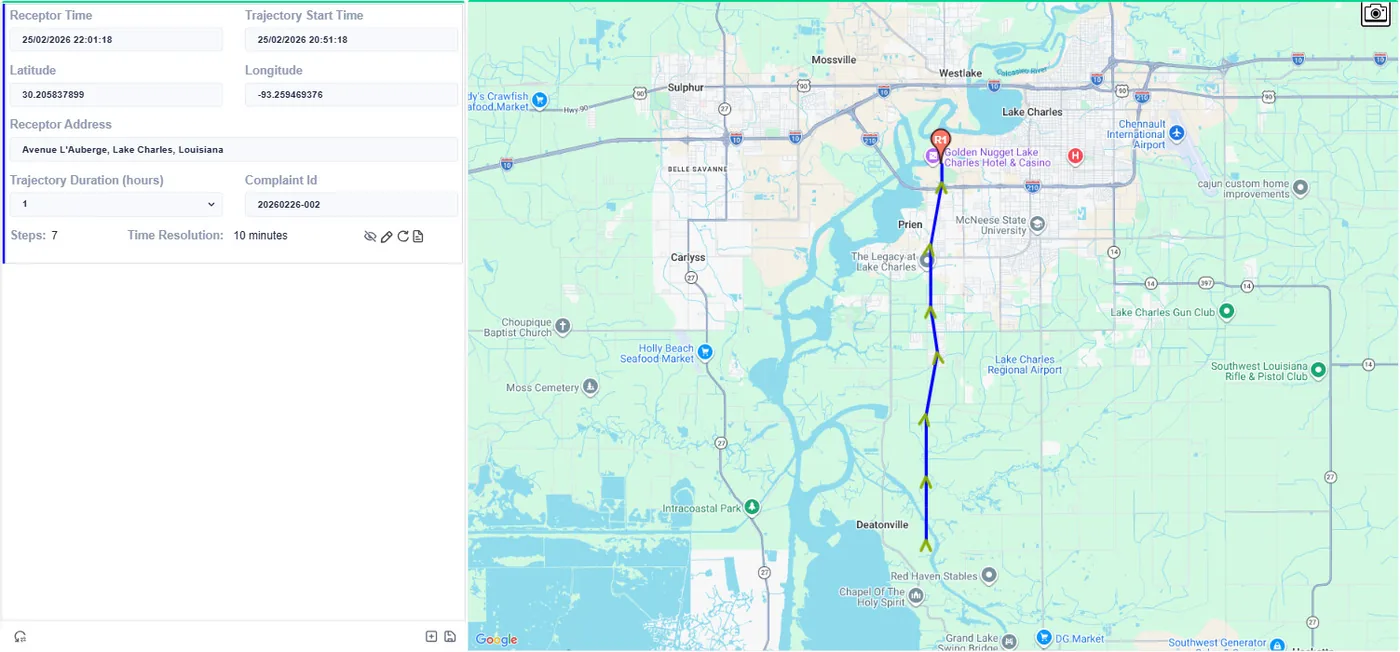
Trace hazard reports backward through wind history to identify the likely source. Time-resolved trajectories with adjustable duration and resolution turn anonymous odor complaints into actionable investigative leads.
Pinpointing where an odor or emission came from is one of the hardest challenges in environmental enforcement. HaZapp does it automatically the moment a report is filed.
Centralized Complaint Management
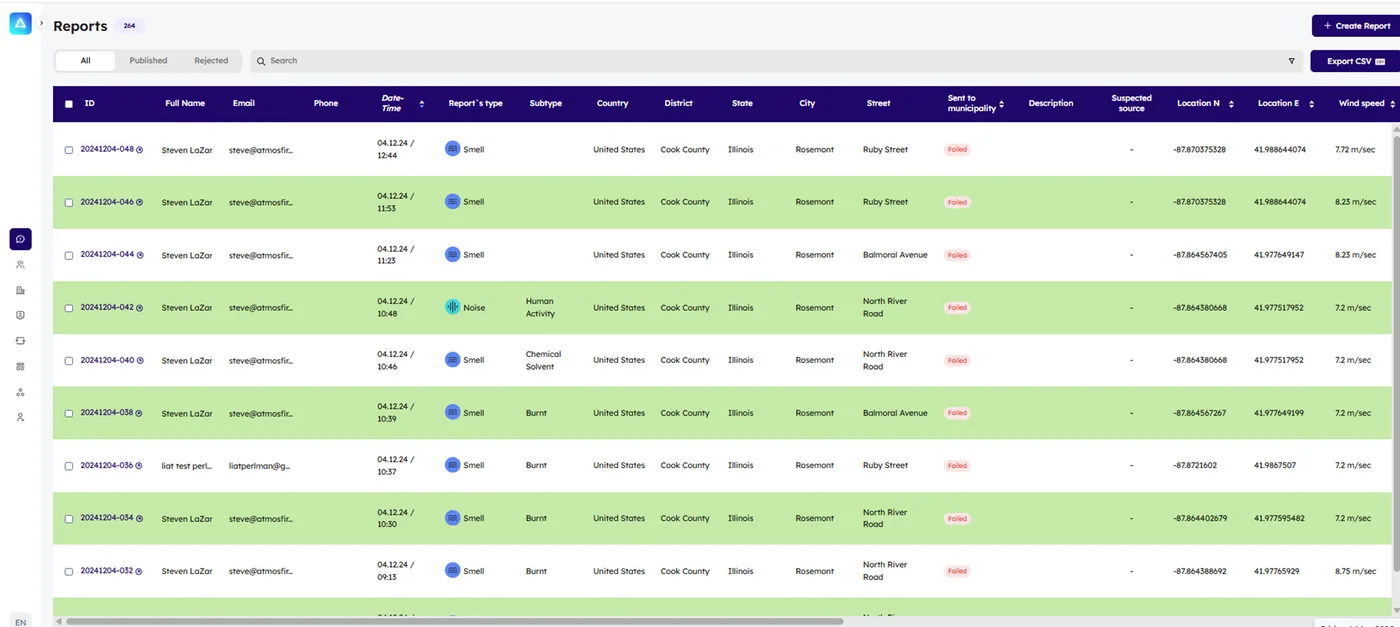
Every report — searchable, sortable, and filterable by hazard type, date, location, or wind conditions. Built for the people who need to triage at volume and document for compliance.
Export to CSV for further analysis, regulatory submissions, or integration with existing systems.
More Than a Reporting App
Pattern Recognition
Cluster reports across time and geography to spot emerging issues before they become crises. Surface hotspots, recurring sources, and temporal patterns invisible in single reports.
Anonymous Reporting
Reports appear on the map without exposing reporter identity. Removes the fear of retaliation that keeps employees, residents, and students from speaking up about real concerns.
Compliance-Ready Export
Structured data export to CSV with full metadata — hazard type, location, time, wind conditions, and reporter notes. Ready for regulatory documentation and integration.
What the Research Shows
Sources: GoGov Apps 2025; Liu et al., Nature Computational Science 2023; Nature Communications 2023; Sustainable Cities and Society 2025
Ready to Modernize Your Reporting?
Whether you're a state agency, port authority, industrial facility, municipality, or university — HaZapp is ready to deploy with no infrastructure required.